

7 Steps to Simplify Your Daily Skincare Routine
Last Updated: November 14, 2026
Quick Summary
To simplify skincare, keep a core of three to five products: a gentle cleanser, a moisturizer, a sunscreen, and optionally one targeted treatment. Store unused products out of sight for four to six weeks, then let go of anything you did not miss.
- Empty your shelf and sort every product into keep, pause, and let go piles in about 30 minutes.
- A beginner routine needs only three steps: cleanse, moisturize, and protect with sunscreen.
- Keep your morning routine under five minutes and your evening routine under ten minutes.
- Transition from a longer routine over four weeks, dropping the least-used steps first.
- Patch-test any new product on your inner arm for two to three days before using it on your face.
Table of Contents
- Why Fewer Products Can Mean Better Skin
- The 7-Step Product Audit: Declutter Your Shelf
- A Daily Skin Care Routine for Beginners: Start With Three Steps
- A Simple Skin Care Routine Day and Night
- Choosing a Gentle Cleanser for Your Skin Type
- Moisturizer and Sunscreen: The Two Products That Stay
- Your Daily Skin Care Routine at Home: Making It Stick
- An Affordable Skin Care Routine in Your 30s
- Build Your Simplified Routine With Dehaz Skincare
- Frequently Asked Questions
Why Fewer Products Can Mean Better Skin
, according to the FDA's overview of cosmetic use and regulation. That is a lot of bottles, and a lot of chances for one product to work against another. If you have ever wondered how to simplify skincare without losing results, this guide from Dehaz Skincare walks you through it step by step.
Here is the core idea: a shorter routine is easier to follow, easier to read on your skin, and easier to keep up with. Cleansing and moisturizing are the habits most people build a routine around. Those two steps carry most of the load. Everything else is optional.
Below, we show you exactly how to cut the clutter and build a routine you will actually stick to. The payoff is real: fewer steps, less guesswork, and skin that gets consistent care instead of occasional attention.
The 7-Step Product Audit: Declutter Your Shelf
Start by emptying your shelf and sorting every product into three piles: keep, pause, and let go. This audit takes about 30 minutes and gives you a clear picture of what you actually use. The goal is not to throw everything away but to make deliberate choices about what earns a spot in your daily routine.

Work through these seven steps in order:
- Gather everything. Pull every bottle, jar, and tube into one place. Include samples, travel sizes, and products you have tucked away in drawers.
- Check dates. Toss anything past its expiration or opened long ago. Most opened products have a small symbol on the label showing how many months they stay fresh after opening.
- Flag duplicates. Two cleansers, three serums, four moisturizers: pick one of each category that you reach for most often. The others go in the pause pile.
- Mark what you used this week. Unused products go in the pause or let-go pile. If you have not touched a product in a month, it is not part of your routine.
- Note what your skin liked. Keep the products that felt comfortable and caused no irritation. If you are unsure, test a small amount on your inner arm for a few days before deciding.
- Set aside the complicated extras. Toners, essences, and masks can wait. They are not harmful, but they add steps without adding much for most people.
- Keep a core of three to five products. This becomes your new baseline. A gentle cleanser, a moisturizer, a sunscreen, and optionally one targeted treatment are enough for most skin.
For the pause pile, store those products in a box out of sight for four to six weeks. If you do not miss them, let them go. If your skin feels like it needs one back, you can reintroduce it slowly. This pause period is a simple way to test whether a product is truly part of your routine or just taking up space.
Watch out: the biggest mistake here is keeping a product because it was expensive. A product that sits unused costs you more than one you let go. The same goes for products you bought because of a trend but never felt comfortable using. Your routine should serve your skin, not your shelf.
Here is the audit at a glance, with each step and what it asks you to do.
| Step | What to do | Time or frequency |
|---|---|---|
| 1 | Gather every bottle, jar, tube, sample and travel size | Once |
| 2 | Check dates and toss anything past its expiration | Once |
| 3 | Flag duplicates and keep one of each category | Once |
| 4 | Mark what you used this week; unused goes to pause | Once |
| 5 | Note what your skin liked; patch-test inner arm if unsure | A few days |
| 6 | Set aside complicated extras like toners, essences and masks | Once |
| 7 | Keep a core of three to five products | Ongoing |
| Pause pile | Store out of sight, then let go if not missed | Four to six weeks |
A Daily Skin Care Routine for Beginners: Start With Three Steps
A beginner routine needs three things: cleanse, moisturize, and protect. That is it. These three steps cover the basics of a daily skin care routine for beginners, and you can add more later if your skin asks for it.
Here is the order:
- Cleanse with lukewarm water and a gentle cleanser.
- Moisturize while skin is still slightly damp.
- Protect with sunscreen in the morning.
A 2026 study in PubMed Central on dermatologists' views of multi-step routines examined how dermatologists view complex routines and social media's pull toward more steps. The takeaway for beginners is simple: start small and stay consistent.
Consistency beats complexity. Three steps done daily will do more for your skin than ten steps done twice a month.
A Simple Skin Care Routine Day and Night
A simple skin care routine day and night splits into two short blocks. Morning is about protection. Evening is about cleansing and repair. The key is to keep both blocks short enough that you will actually do them every day.
Morning routine:
- Cleanse gently or rinse with water
- Apply moisturizer
- Finish with sunscreen
Evening routine:
- Remove makeup and cleanse
- Apply moisturizer
- Add one targeted treatment if you use one
If you want the full breakdown on application order, our guide on how to layer botanical skincare products explains which texture goes first. The rule of thumb from Baylor College of Medicine is to layer from lightest to thickest texture (Baylor College of Medicine skincare guidance).
Keep both routines short. A morning routine should take under five minutes. An evening routine should take under ten minutes, including makeup removal.
How to transition from a longer routine without confusing your skin
If you are used to a ten-step routine, cutting back all at once can leave your skin feeling uncertain. A staged approach works better. Here is a simple four-week plan:
- Week 1: Drop the steps you use least often, such as masks or essences. Keep your cleanser, moisturizer, sunscreen, and any targeted treatment.
- Week 2: If you use more than one serum or treatment, alternate them every other night instead of layering them together.
- Week 3: Simplify your cleansing step. If you double cleanse, try a single gentle cleanse on days you do not wear makeup.
- Week 4: Assess how your skin feels. If it feels comfortable and balanced, you have found your baseline. If it feels dry or tight, add back one moisturizing step.
Patch-test any new product on your inner arm for two to three days before using it on your face. During the transition, watch for signs of irritation such as redness, tightness, or flaking. If those appear, pause the newest product and give your skin a week to settle.
Adapting the routine to your day
A routine that works at home may not work when you travel, exercise, or face a change in weather. Keep these adjustments in mind:
- Travel: Pack a gentle cleanser, a moisturizer, and a sunscreen in travel sizes. Skip the extras for a few days; your skin will not suffer.
- Exercise: If you sweat, rinse your face with water or use a gentle cleanser afterward. Do not over-cleanse; once is enough.
- Humid weather: A lighter moisturizer may feel more comfortable. In dry weather, a richer cream can help hold in hydration.
- Busy mornings: If you are short on time, a water rinse followed by moisturizer and sunscreen is enough. Save the full cleanse for the evening.
A common pattern is that people who simplify their routine find it easier to stay consistent, even when their schedule changes. The routine bends with your day instead of breaking it.
Choosing a Gentle Cleanser for Your Skin Type
The best cleanser for most people is a gentle one that removes impurities without leaving skin tight or stripped. Match the formula to how your skin feels, not to how many steps you can fit in.
- Dry or sensitive skin: look for creamy, soothing formulas
- Oily or congested skin: look for gel or foaming textures
- Combination skin: a mild foaming oil cleanser often balances both zones
The COPAIBA & BLUE TANSY Soothing & Balancing Cleanser pairs Copaiba Resin and Blue Tansy with a ceramide complex for a comfort-first cleanse. If you prefer a rose-forward option, the DEHAZ MOROCCAN ROSE FOAMING OIL CLEANSER turns from oil to a soft foam and rinses clean.
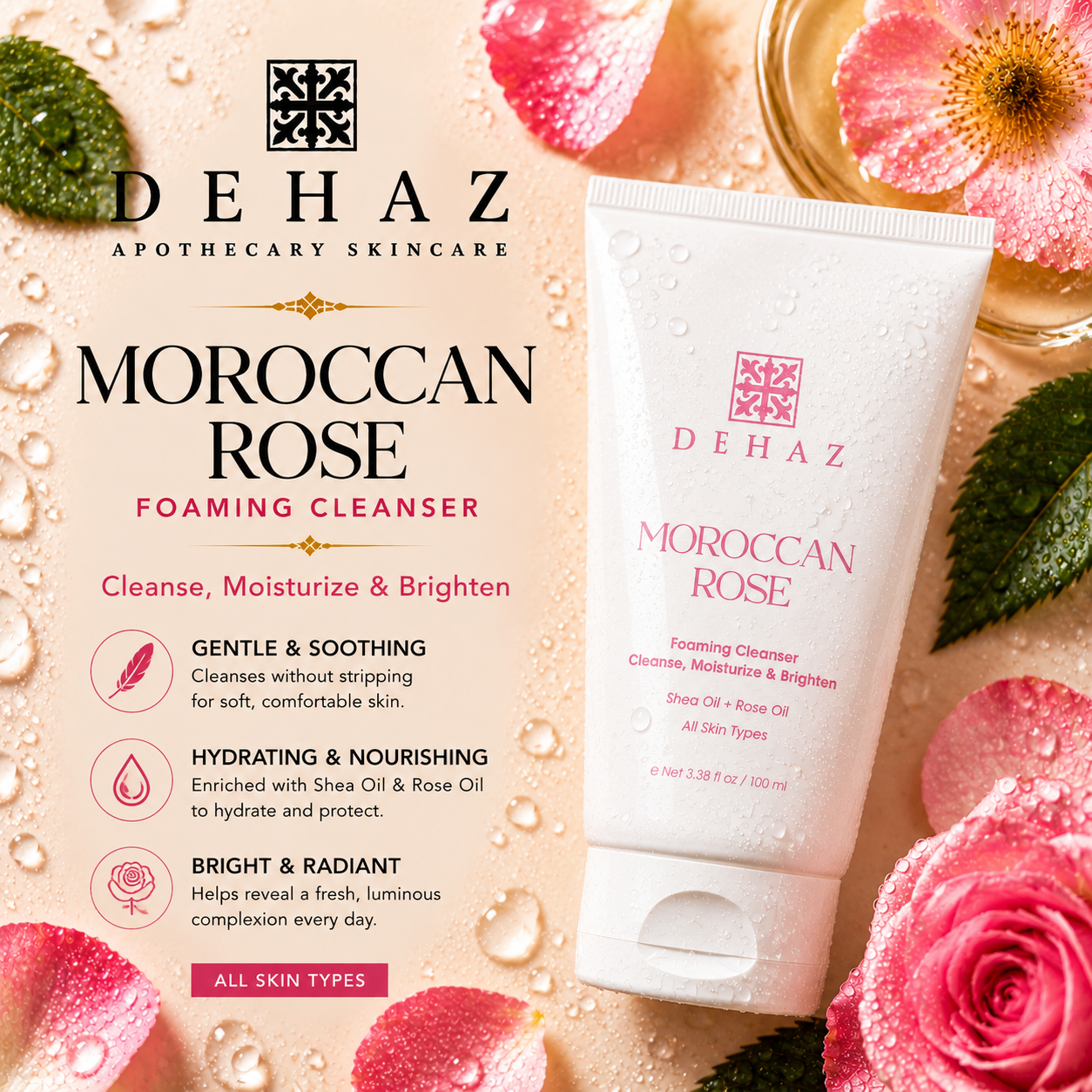

Use lukewarm water and massage in gentle circles.
Moisturizer and Sunscreen: The Two Products That Stay
Moisturizer and sunscreen are the two products that earn a permanent spot in any minimal routine. Moisturizer supports the skin barrier and holds in hydration. Sunscreen protects against daily sun exposure, which is the main driver of visible aging.
Apply moisturizer to damp skin, then let it settle before sunscreen. In the morning, sunscreen goes last.
The LILIKOI Hydration Boosting Cream blends Lilikoi Seed Oil, Snow Mushroom Extract, and a ceramide complex for deep hydration. It is recommended for dry, sensitive, and mature skin.
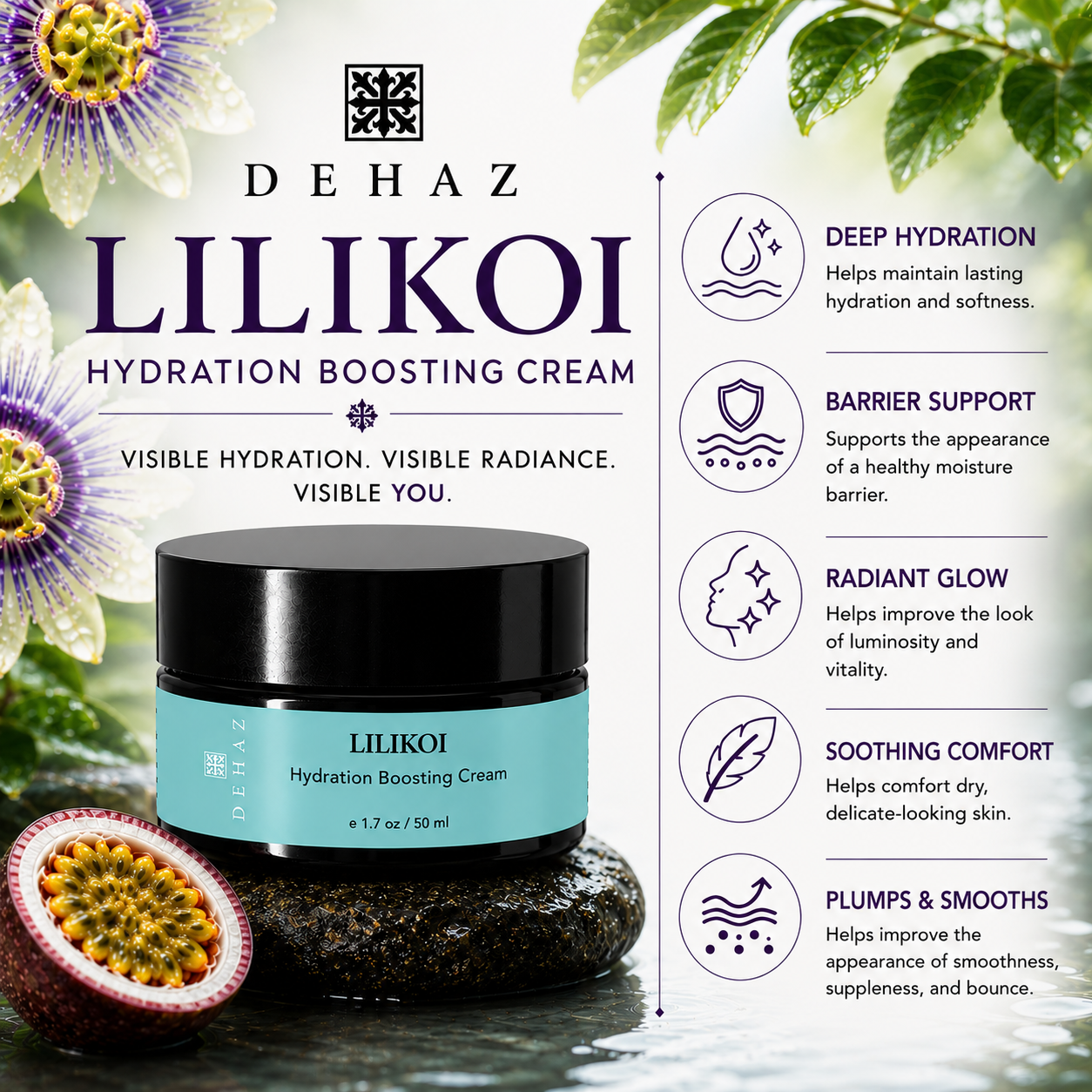
Sunscreen is not optional. Rain or shine, it stays in the routine. This one product does more for long-term skin appearance than any stack of serums.
Your Daily Skin Care Routine at Home: Making It Stick
A daily skin care routine at home works best when it fits your real life. The trick is to attach each step to something you already do.
Try these habits:
- Keep products visible on the counter, not in a drawer
- Pair cleansing with brushing your teeth
- Set a two-minute timer for the evening routine
- Store sunscreen beside your keys or makeup bag
- Refill only what you finish
Simpler routines are also a 2026 trend. Bigeye Agency's Skincare Marketing Trends 2026 report describes simpler claims and proof-driven messaging as a growing focus.
If you miss a night, do not restart the whole system. Just pick up the next day. Consistency over weeks matters more than perfection on any single day.
An Affordable Skin Care Routine in Your 30s
An affordable skin care routine in your 30s comes down to spending on the few products you use daily and skipping the extras. In your 30s, many people start thinking about signs of aging and uneven tone, and the temptation is to buy more. The smarter move is to buy less, but choose well.
Our three-step approach:
- One gentle cleanser you use twice a day
- One moisturizer that supports hydration
- One sunscreen you will actually wear
For a deeper look at aging-focused minimalism, read our guide on a minimalist skincare routine for aging skin. It walks through the same three steps with more detail on what to look for.
Budget tip: a product you use every day is worth more than three you use once a week.
Build Your Simplified Routine With Dehaz Skincare
A simplified routine is not about doing less for your skin. It is about doing the right things, consistently. When you simplify skincare, you make room for the steps that matter and drop the ones that only add clutter.
At Dehaz Skincare, every formula is developed by an esthetician and built around rare botanicals paired with high-performance actives. That is how a three-step routine can still feel like a treat.
Here is how we would start:
- Cleanse with a gentle, skin-comforting formula
- Moisturize with a barrier-supporting cream
- Protect with sunscreen every morning
That is the whole system. Fewer products, more consistency, and skin that gets steady care.
Ready to cut the clutter and build a routine that fits your life? Start with a gentle cleanser, a barrier-supporting moisturizer, and daily sun protection. Get started with Dehaz Skincare and turn your daily routine into a simple, sensorial ritual.
Frequently Asked Questions
How many products do you need for a basic skincare routine?
A basic routine needs three: a gentle cleanser, a moisturizer, and a daytime sunscreen. That covers cleansing, hydration, and sun protection, which are the steps most people use daily. Trimming to three core items is a meaningful reduction for many routines. If you have a specific concern, add one targeted treatment rather than several.
Can I use the same skincare routine in the morning and at night?
The core steps stay the same, but the products shift. In the morning, cleanse, moisturize, and apply sunscreen. At night, cleanse to remove makeup and the day's buildup, then moisturize. Sunscreen is the main difference, since it belongs in your morning routine. A simple skin care routine day and night can share the same cleanser and moisturizer, which keeps your shelf small and your spending lower.
How do I simplify skincare if I use a prescription treatment?
Keep your prescription as directed and build a short routine around it: a gentle cleanser, a moisturizer, and daytime sunscreen. Add nothing new in the same week you start or change a prescription, so you can tell what is working. If you notice irritation, talk to the professional who prescribed it before adding or removing products. A minimalist routine supports consistency, which matters most with prescription treatments.
How long before I know a simplified routine is working?
Give it four to six weeks of daily use before judging results. Skin behaves best with consistency, and cutting products can bring short-term changes as your skin adjusts. Track how your skin feels and looks each week rather than checking daily. If you see irritation or breakouts that persist beyond a few weeks, remove the newest product first and return to your three core steps.

