

Minimalist Skincare Routine for Aging Skin: 3 Steps
Table of Contents
- The 3-Step Minimalist Skincare Routine That Targets Aging
-
Essential Anti-Aging Ingredients for a Minimalist Routine
- Retinoids: The Gold Standard for Collagen Stimulation
- Vitamin C (L-Ascorbic Acid): Antioxidant Defense and Brightening
- Niacinamide: The Barrier-Supporting Multi-Tasker
- Peptides: Signaling Molecules for Elasticity
- Hyaluronic Acid: Hydration, Not Moisturization
- Ingredient Layering Conflicts: What Not to Combine
- How to Layer Skincare for Aging Skin: A Simple Guide
- How Long to See Results From Anti-Aging Products
- Common Mistakes to Avoid in Your Minimalist Routine
- Simplify an Existing Complex Routine
- Conclusion: Start Your Minimalist Routine Tonight
- Frequently Asked Questions
Last Updated: September 9, 2026
The 3-Step Minimalist Skincare Routine That Targets Aging
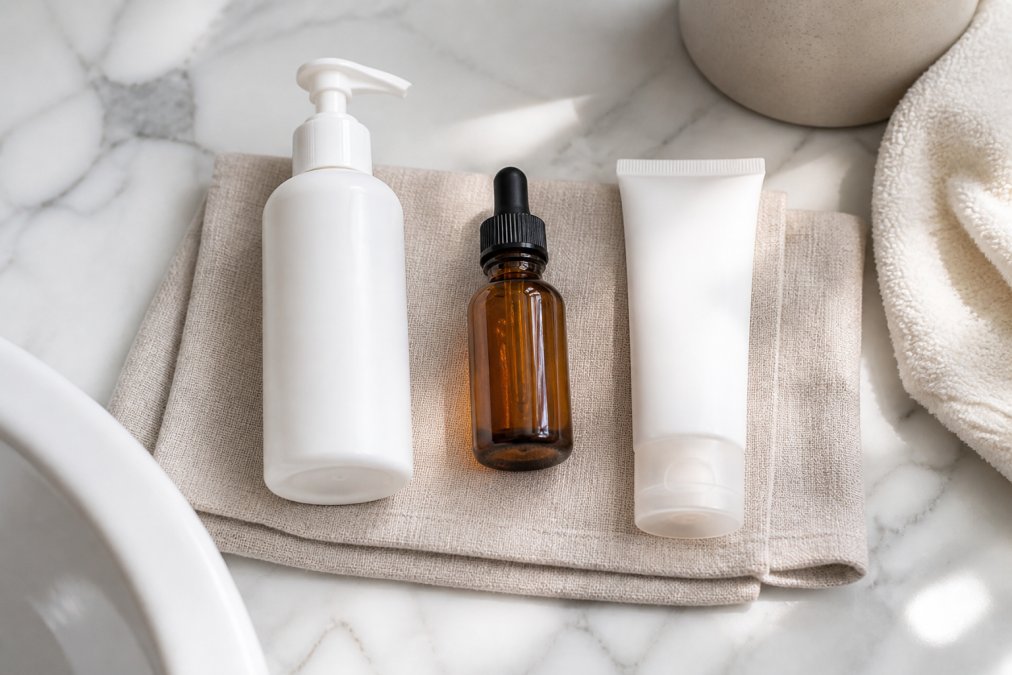
A minimalist skincare routine for aging skin is built on three non-negotiable steps: cleanse, treat, and protect. This framework, often called skinimalism, strips away 10-step regimens in favor of products that deliver the most impact per application.
The core tension in anti-aging skincare is that the most effective ingredients are often the most irritating. A minimalist routine resolves this by focusing on consistent, gentle application rather than layering aggressive formulas.
Step 1: Cleanse Without Stripping Your Barrier
Your morning and evening routines begin the same way: with a gentle cleanser that removes impurities without disrupting your lipid barrier. Harsh, foaming cleansers that leave skin feeling tight signal barrier damage, which accelerates transepidermal water loss and makes fine lines more pronounced.
Look for a non-comedogenic cleanser with a pH balance close to your skin's natural level of about 5.5 (peer-reviewed research). If you wear heavy makeup, consider a cleansing balm first, but for most minimalist routines, one thorough cleanse suffices.
Step 2: Treat With Targeted Active Ingredients
The treatment step is where your minimalist skincare routine for aging skin does its heaviest lifting. Apply a serum containing retinoids, antioxidants, or peptides, depending on your primary concern.
For wrinkles and loss of elasticity, a retinoid is the gold standard because it accelerates cell turnover and stimulates collagen production. For hyperpigmentation and dullness, vitamin C offers antioxidant protection while brightening the complexion. A common mistake is introducing multiple actives at once. Start with one, apply it every other night, and patch test before committing.
Step 3: Protect With Daily Sunscreen
Sun protection is the most critical step for aging skin, yet it is the one most often skipped. Broad-spectrum SPF 30 or higher is non-negotiable, as UV exposure drives photoaging and breaks down collagen.
A common mistake is reserving sunscreen for sunny days. UVA rays penetrate clouds and glass, meaning daily application is required regardless of weather. The American Academy of Dermatology guidelines on daily sun protection recommend applying sunscreen to all exposed skin every day, even when indoors near windows.
Essential Anti-Aging Ingredients for a Minimalist Routine
When your routine is minimal, every ingredient must earn its place. The most effective minimalist formulas pair a few hero ingredients rather than listing dozens of botanical extracts.
Retinoids: The Gold Standard for Collagen Stimulation
Retinoids (retinol, retinaldehyde, adapalene, tretinoin) are the most extensively studied ingredients for photoaging. They bind to retinoic acid receptors in the skin, normalizing cell turnover and stimulating procollagen production. Over 12 weeks of consistent use, most people see measurable improvement in fine lines and skin texture.
Key usage rules for a minimalist routine:
- Start low and slow: Begin with 0.1% retinol twice a week for two weeks, then increase by one night per week. This gradual build minimizes the 'retinization' period of peeling and redness.
- Use only at night: Retinoids are photolabile and degrade in sunlight. Morning use is wasted product.
- Wait 20 minutes after cleansing: Applying retinol to damp skin increases penetration and irritation risk. Dry skin is a buffer.
- Do not combine with direct acids in the same application: The pH conflict and cumulative irritation can strip the barrier. If you use an exfoliating acid, do it on a separate morning or skip it entirely.
Vitamin C (L-Ascorbic Acid): Antioxidant Defense and Brightening
L-ascorbic acid is the only form of vitamin C proven to boost collagen synthesis and neutralize free radicals from UV exposure. It also inhibits tyrosinase, the enzyme that produces melanin, helping fade hyperpigmentation over 8-12 weeks.
Usage rules:
- Use in the morning under sunscreen: Vitamin C amplifies SPF protection against UVA-induced oxidative stress.
- Check the formulation: L-ascorbic acid is unstable. Look for a water-free or pH-stabilized formula (pH 3.5 or lower) in an opaque, airless pump. If the serum turns yellow-orange, it has oxidized and is ineffective.
- Apply to dry skin: Like retinol, vitamin C penetrates better on dry skin and is less likely to sting.
Niacinamide: The Barrier-Supporting Multi-Tasker
Niacinamide (vitamin B3) increases ceramide synthesis, strengthening the lipid barrier and reducing transepidermal water loss. At 2-5% concentration, it also reduces redness and blotchiness, making it the most forgiving active for sensitive, aging skin.
Niacinamide is pH-stable and can be layered with almost anything. However, if you use a high-concentration niacinamide serum (10% or more) alongside a retinoid, you may experience flushing. Stick to formulas at 5% or below for daily use.
Peptides: Signaling Molecules for Elasticity
Peptides are short chains of amino acids that act as messengers, telling fibroblasts to produce more collagen and elastin. They are gentler than retinoids but slower-acting; visible firming typically requires 8-16 weeks of twice-daily use. Copper peptides (GHK-Cu) are the most studied for wound healing, but they can oxidize vitamin C if layered directly; use copper peptides at night and vitamin C in the morning.
Hyaluronic Acid: Hydration, Not Moisturization
Hyaluronic acid (HA) is a humectant that draws water into the stratum corneum, plumping fine lines temporarily but not preventing water loss on its own. For aging skin, HA must be paired with an occlusive moisturizer (containing shea butter, squalane, or ceramides) to seal the water in. A multi-weight formula gives both immediate and sustained hydration.
Ingredient Layering Conflicts: What Not to Combine
A minimalist routine fails when two actives cancel each other out or cause irritation. The three conflicts to avoid:
- Retinoid + AHA/BHA in the same evening, pH conflict and barrier damage.
- Copper peptides + L-ascorbic acid, oxidation and reduced efficacy of both.
- Niacinamide (high %) + retinoid, potential flushing and stinging.
A safe minimalist stack is:
- Morning: Vitamin C → moisturizer → SPF
- Evening: Retinoid (on dry skin) → moisturizer
- Optional 1-2 nights/week: Swap retinol for a gentle PHA or lactic acid exfoliant if texture is a concern.
This ingredient framework is the backbone of a minimalist routine. The next section explains exactly how to layer these products for maximum absorption and minimum waste.
How to Layer Skincare for Aging Skin: A Simple Guide
The order of application determines how well your skin absorbs active ingredients. Apply products from thinnest to thickest consistency, so lightweight serums penetrate before heavier moisturizers create a seal.
A typical minimalist layering sequence is:
- Cleanser
- Treatment serum while skin is damp
- Moisturizer to lock in hydration
- Sunscreen as the final morning step
This approach to how to layer skincare for aging skin ensures that active ingredients reach the dermal layers where they work. If you are coming from a complex routine, expect the transition to feel strange for the first week. Your skin may purge as cell turnover increases, but this is a sign the retinoid is working, not a reason to stop.
How Long to See Results From Anti-Aging Products
Patience is the hardest part of any minimalist skincare routine for aging skin. Many people abandon products after two weeks because they see no change, but the skin's natural renewal cycle takes roughly 28 days, and collagen remodeling takes longer.
For hydration and barrier improvements, you may notice a difference within one to two weeks. Fine lines and elasticity respond more slowly, with visible changes typically appearing after eight to twelve weeks of consistent retinoid use. Hyperpigmentation fades on a similar timeline, though stubborn sun spots can take several months of daily SPF use to lighten.
The question of how long to see results from anti-aging products depends on your consistency. Skipping applications resets your progress, especially with retinoids, which require gradual buildup to maintain tolerance. Commit to a routine for a full three months before deciding whether it works for you.
Common Mistakes to Avoid in Your Minimalist Routine
The most common mistake is confusing minimalism with skipping sunscreen. A routine that omits daily SPF is not minimalist; it is incomplete, and the sun damage that accumulates will undo the work of every other product.
Another frequent error is over-exfoliating. Even in a minimalist routine, the temptation to add a physical scrub or a weekly acid peel is strong, but aging skin recovers more slowly. Over-exfoliation compromises the barrier, leading to dehydration and increased sensitivity. Limit exfoliation to once weekly and choose a gentle chemical exfoliant over abrasive scrubs.
Finally, do not introduce multiple new products simultaneously. If a reaction occurs, you will not know which product caused it. Introduce one product at a time and wait at least two weeks before adding another.
Simplify an Existing Complex Routine
Transitioning from a 10-step regimen to three products feels like a risk, especially if you have invested heavily in your current system. The key is to audit what you own and identify redundancies. Toners and essences often duplicate the hydration provided by a quality serum and moisturizer, and multiple serums targeting the same concern can be consolidated into one.
The 5-Minute Shelf Audit
Take everything off your shelf and sort into five piles:
- Cleansers, Keep one gentle foaming or cream cleanser. If you have a separate balm for makeup removal, keep it only if you wear heavy eye makeup more than 3 days a week.
- Treatment serums, Group by primary function: antioxidant, retinoid, exfoliant, hydrating. Keep only one serum per function.
- Moisturizers, Keep one daytime (lightweight, with antioxidants) and one nighttime (richer, with ceramides or peptides). If you have a moisturizer with SPF, it can replace a separate daytime moisturizer only if you use enough (a nickel-sized amount for the face and neck).
- Sunscreen, This is non-negotiable. Keep one broad-spectrum SPF 30+ that you actually enjoy wearing. If you hate the texture, you will skip it, that is the one product you cannot consolidate away.
- Masks, scrubs, and spot treatments, These are 'occasional use.' Keep a maximum of one exfoliating mask and one spot treatment. Everything else goes into a drawer for a 30-day trial separation.
The 30-Day Drawer Test
Instead of throwing products away, box up everything you removed and store it out of sight for 30 days. After a month of your new three-step routine, check in: has your skin broken out, become drier, or lost its glow? If not, donate or repurpose the boxed products. If you notice a regression, reintroduce one product at a time and wait two weeks before judging. This method prevents the 'panic re-add' that undoes simplification.
Budget-Conscious Consolidation: Drugstore Alternatives That Work
Minimalism does not require luxury pricing. The active ingredients that matter for aging skin, retinol, vitamin C, niacinamide, peptides, are available at drugstore price points. High-end formulas differ in texture and fragrance, not in active concentration. When consolidating, look for:
- Retinol: Drugstore options at 0.1-0.3% are effective for maintenance. Prescription tretinoin (generic) is often covered by insurance and costs less per month than a prestige serum.
- Vitamin C: Look for ethylated ascorbic acid or 3-O-ethyl ascorbic acid, which are more stable than L-ascorbic acid and appear in budget-friendly formulas without the oxidation problem.
- Moisturizer with ceramides: A basic fragrance-free ceramide cream from a drugstore brand provides the same barrier support as a $60 jar. The difference is cosmetic elegance, not efficacy.
The Sustainability Angle: Fewer Bottles, Less Waste
A minimalist routine is inherently more sustainable, fewer plastic pumps, fewer cardboard boxes, less shipping weight. But you can push further:
- Choose airless pumps over droppers: Droppers expose formulas to oxygen and bacteria, causing oxidation and premature disposal. Airless pumps extend product life by 20-30%.
- Buy the largest size of your daily SPF: Sunscreen is the one product you will finish. A 3-ounce tube lasts about 2 months with daily face-and-neck use; a 5-ounce bottle lasts 3+ months and reduces packaging per use.
- Check for refill programs: Some brands offer refill pouches for cleansers and moisturizers, cutting plastic waste by up to 70%.
- Do not fall for 'anti-aging' marketing on cleansers: A cleanser is on your skin for 60 seconds. It does not need peptides or retinol. A basic gentle cleanser is all you need, and it is the cheapest product in your routine.
When to Keep a Product Despite the Minimalist Ideal
There are two exceptions to the 'one per function' rule:
- A prescription treatment (e.g., tretinoin, azelaic acid) for a diagnosed condition like acne or melasma. Prescription actives outrank any over-the-counter serum and should never be dropped for the sake of simplicity.
- A hormonal-support moisturizer for perimenopause or menopause. Skin during this transition loses lipids and sebum production drops. A moisturizer containing shea butter, squalane, or dimethicone is not redundant, it is a medical necessity for barrier function.
The National Institutes of Health review on topical anti-aging ingredients confirms that consistent use of a few proven ingredients outperforms sporadic application of many. Dehaz Skincare formulates with maximum concentrations of high-performance actives, supporting skin balance while simplifying your shelf.
Conclusion: Start Your Minimalist Routine Tonight
The evidence for minimalism is clear: fewer, better-chosen products used consistently will outperform a crowded regimen used sporadically. Begin with a gentle cleanse, a targeted treatment, and disciplined sun protection, then give your skin three months to respond.
Dehaz Skincare was developed by an esthetician to support this exact approach, uniting ancient Moroccan beauty traditions with modern scientific innovation. Each product delivers a complete aromatic experience that transforms your daily routine into a sensorial ritual, proving that effective skincare for aging skin does not require complexity. Explore our collection and simplify your routine with products designed for visible skin refinement and lasting vitality.
Frequently Asked Questions
What is the best simple skincare routine for aging skin?
The most effective simple routine for aging skin has three steps: a gentle cleanser, a treatment serum with essential anti-aging ingredients like retinoids or antioxidants, and a broad-spectrum SPF 30 or higher every morning. This approach directly targets collagen production, fine lines, and hyperpigmentation without overwhelming your skin. Consistency with this minimalist skincare routine matters more than the number of products you use.
Can a 3-step routine effectively address signs of aging?
Yes. Dermatologists agree that cleansing, treating, and protecting form the foundation of preventative care. A treatment step with a retinoid or vitamin C serum drives cell turnover and collagen production. Daily sunscreen prevents photoaging and free radical damage, which cause the majority of visible wrinkles. For most people, this minimalist skincare routine for aging skin delivers visible refinement within 8 to 12 weeks.
How can I simplify my skincare routine without sacrificing anti-aging results?
Focus on multi-tasking products and correct layering. Choose one serum that combines antioxidants with hydrating ingredients like hyaluronic acid. Use a single moisturizer that supports barrier repair. Eliminate separate essences, toners, and masks that duplicate ingredients. Keep your routine to cleanse, treat, protect, and moisturize. This approach maintains results while cutting your routine to under five minutes each morning and evening.
What ingredients should I prioritize for a minimalist anti-aging regimen?
Prioritize three categories: retinoids for cell turnover and collagen production, antioxidants like vitamin C to neutralize free radical damage, and hydrating ingredients such as hyaluronic acid to plump fine lines. Always pair these with a broad-spectrum SPF. If your skin is sensitive, introduce retinoids gradually or use a bakuchiol alternative. These essential anti-aging ingredients deliver the most visible results per product.
A minimalist skincare routine for aging skin is not about doing less; it is about doing what matters most. Consistency with the right ingredients, guided by the Skin Cancer Foundation recommendations on photoprotection, will always outperform a cabinet full of half-used bottles. Get started with Dehaz Skincare and give your skin the focused care it deserves.
