

Black Seed Oil in Skincare: What Nigella Sativa Brings to a Clarifying Facial Oil-Serum
Black seed oil, pressed from the small, matte-black seeds of Nigella sativa, is a traditional North African and Middle Eastern botanical that has found its way into modern clarifying skincare. In a facial oil-serum it is valued for its aromatic, antioxidant-rich profile, and it sits comfortably in formulas made for oily-looking, congested or blemish-prone skin. The DEHAZ Akal+Roh Nigella Clarifying Botanical Recovery Serum is built around it. This article looks at where black seed comes from, what the research actually shows, and why an oil can be a sensible choice for skin that looks shiny and feels temperamental.
What Is Black Seed Oil, and Why Do Moroccans Call It Black Gold?
Nigella sativa is a flowering plant native to the Mediterranean, North Africa and the Middle East. Its seeds, often sold as black cumin or black seed, have a long history in Moroccan, Egyptian and Amazigh apothecary traditions, and in Arabic the seed is known as Habbatus Sauda. In Morocco it is often spoken of as black gold, a phrase that has less to do with price than with how much households have relied on it over the generations.
The oil is pressed from those seeds. It smells peppery and herbal, a little like thyme, and that is not accidental: the seed contains thymoquinone, a naturally occurring aromatic compound often described as the oil's main active constituent, along with related aromatics such as carvacrol. Thymoquinone is the molecule that most of the skin research on Nigella revolves around, and it is also what gives the oil its distinctive character on the skin and in the bottle.
What Does the Research Say About Nigella Sativa and Skin?
A 2017 review in the Journal of Tropical Medicine (Eid and colleagues) surveyed the cosmetic and external uses of Nigella sativa. It describes traditional use of the seed and oil for blemishes, wounds and skin tone concerns, and attributes much of the plant's activity to thymoquinone, which has shown antioxidant and antimicrobial behavior in laboratory settings. The review also describes a small study in which a lotion containing 20% Nigella sativa oil was compared with 5% benzoyl peroxide in people with acne; the black seed lotion was reported to reduce lesions with fewer side effects, although lesions returned some weeks after treatment stopped.
That is interesting, and worth keeping in proportion. Most of the evidence is laboratory or animal work, the human data are small, and a lotion with a high percentage of the oil is a different thing from a facial oil-serum that blends many oils. The research gives good reason to take black seed seriously as a botanical for skin that looks congested. It does not make claims about any finished DEHAZ product, and a cosmetic serum is meant to support how skin looks and feels, not to treat a skin condition.
Why Would an Oily-Looking Complexion Want an Oil?
It sounds backwards, but it is a long-standing principle in professional skincare. Skin that looks shiny is frequently being over-cleansed and over-dried in an attempt to control it, which can leave it both oily-looking and uncomfortable. Research from the 1980s by Downing and colleagues in the Journal of the American Academy of Dermatology found that people with acne tended to have lower proportions of linoleic acid in their skin surface lipids, and the authors proposed that this local shortfall could be involved in how follicles become clogged. It is a hypothesis rather than a settled mechanism, but it is one reason formulators reach for lightweight oils that are rich in linoleic acid when they build products for blemish-prone skin.
Rosehip oil and pumpkin seed oil, both part of this formula, are commonly described as linoleic-rich. Used on cleansed skin in a few drops, an oil-serum of this kind is meant to leave skin feeling comfortable and balanced rather than stripped.
Inside the Akal+Roh Nigella Clarifying Botanical Recovery Serum
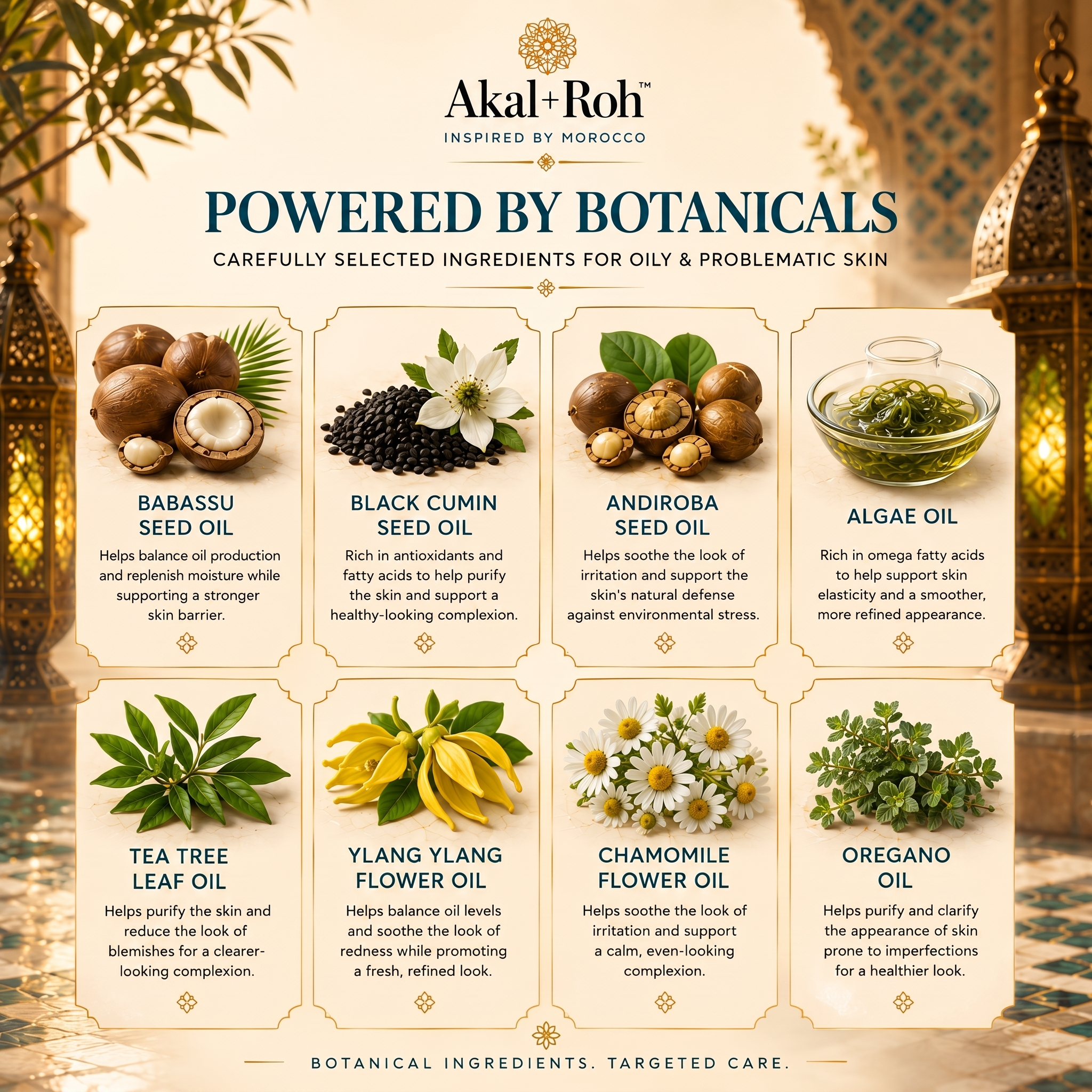
The Nigella serum is a 1 oz / 30 ml facial oil-serum. There is no water phase: the ingredient list begins with babassu seed oil, jojoba seed oil and pumpkin seed oil, followed by castor oil and black seed (Nigella sativa) seed oil, then andiroba, algae oil, tocopherol, rosehip and acai fruit oil. The essential oils come near the end of the list: tea tree, clary sage, ylang ylang, chamomile and oregano, with grapefruit seed extract.
Several of these have a clear role in how the formula feels and behaves.
Babassu, jojoba and pumpkin seed oils make up the light, quickly absorbing base. Jojoba is technically a liquid wax, and its structure is often compared with the skin's own sebum, which is part of why it is a familiar carrier in formulas for combination skin.
Black seed oil is the signature. Alongside tea tree leaf oil, which contains terpinen-4-ol, and oregano oil, which contains carvacrol and thymol, it gives the serum a herbal, clarifying aromatic profile. Chamomile blue oil, which carries the blue compound chamazulene (the same family of color seen in blue tansy), is included for a softer, more comforted skin feel, and ylang ylang and clary sage round out the scent with floral and herbaceous notes.
Acai fruit oil and algae oil add anthocyanin-rich and omega-3 (DHA) fatty acid content respectively, supporting the look of hydrated, healthy skin alongside the clarifying botanicals. Andiroba and rosehip oils add further plant lipids, and tocopherol (vitamin E) helps protect the oils themselves.
The sensory experience is that of a classic Moroccan apothecary oil, but lighter: a few drops warmed between the palms and pressed into the skin, with a herbaceous aroma that fades as it absorbs. The product page describes it as silky and non-greasy, and the formula is designed for skin that looks congested, blemish-prone or imbalanced.
How to Use a Clarifying Oil-Serum
The directions on the product page are simple: apply 2 to 4 drops to cleansed face, neck and décolleté morning and evening, pressing the oil gently into the skin until absorbed, then follow with moisturizer and, in the daytime, sunscreen.
A few practical points from the formulation. Because the serum contains several essential oils, including tea tree, oregano and ylang ylang, it is sensible to patch test on the inner arm before use, and to stop if any redness or stinging appears. Anyone with a known sensitivity to essential oils should read the full ingredient list first. And if skin is currently irritated from strong exfoliating treatments, it makes sense to let it settle before adding anything new.
Building the Routine Around It
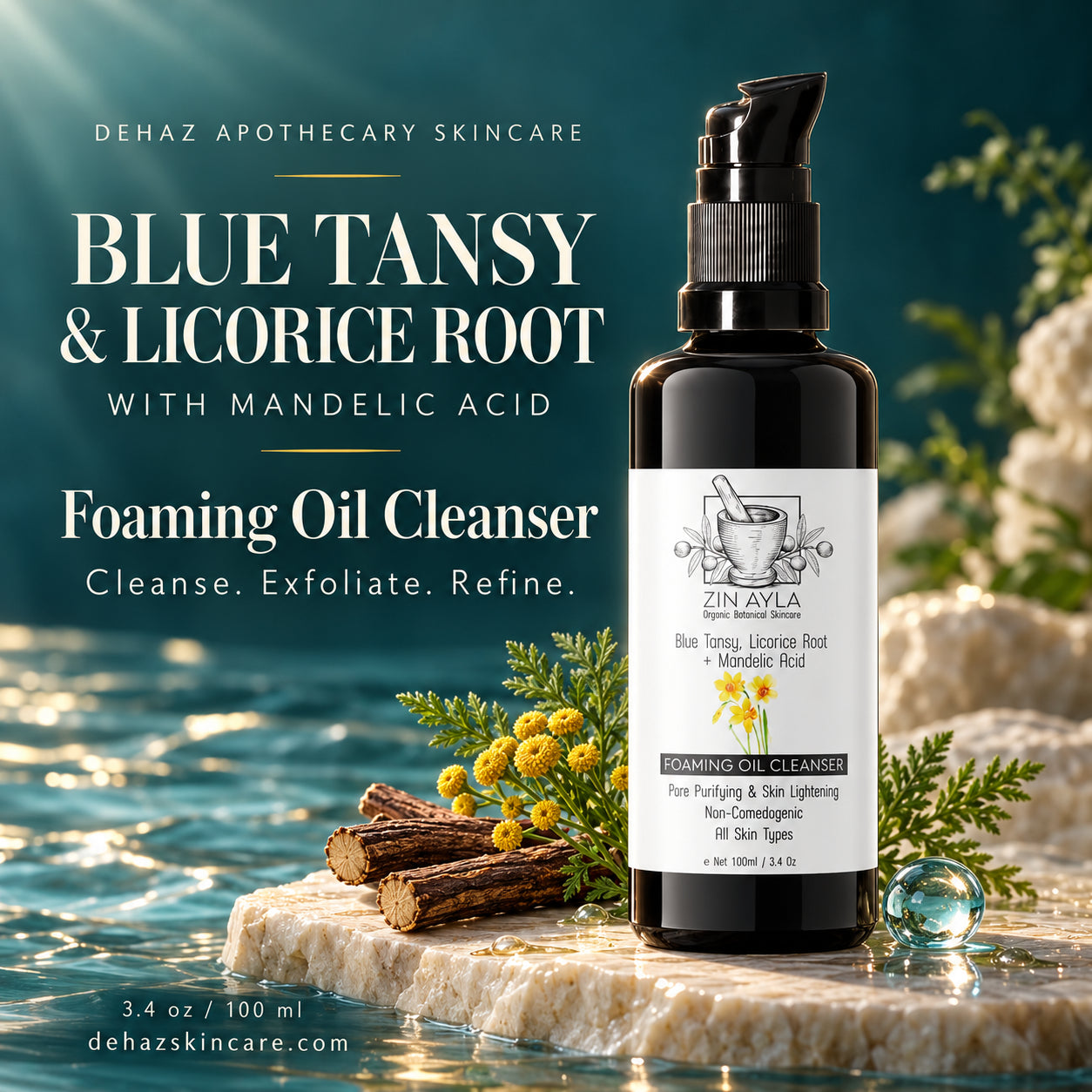
Oil-serums work best when the steps around them are well matched. A gel-like or foaming cleanser that does not strip the skin is a natural starting point, and the Blue Tansy, Licorice Root & Mandelic Acid Foaming Oil Cleanser is one option: it is an oil-based cleanser that includes kaolin clay and mandelic acid, and its page directs a 2 to 5 minute massage on damp skin. It also shares blue tansy's blue-botanical family with the chamomile in the serum; you can read more about it in our guide to blue tansy in skincare.
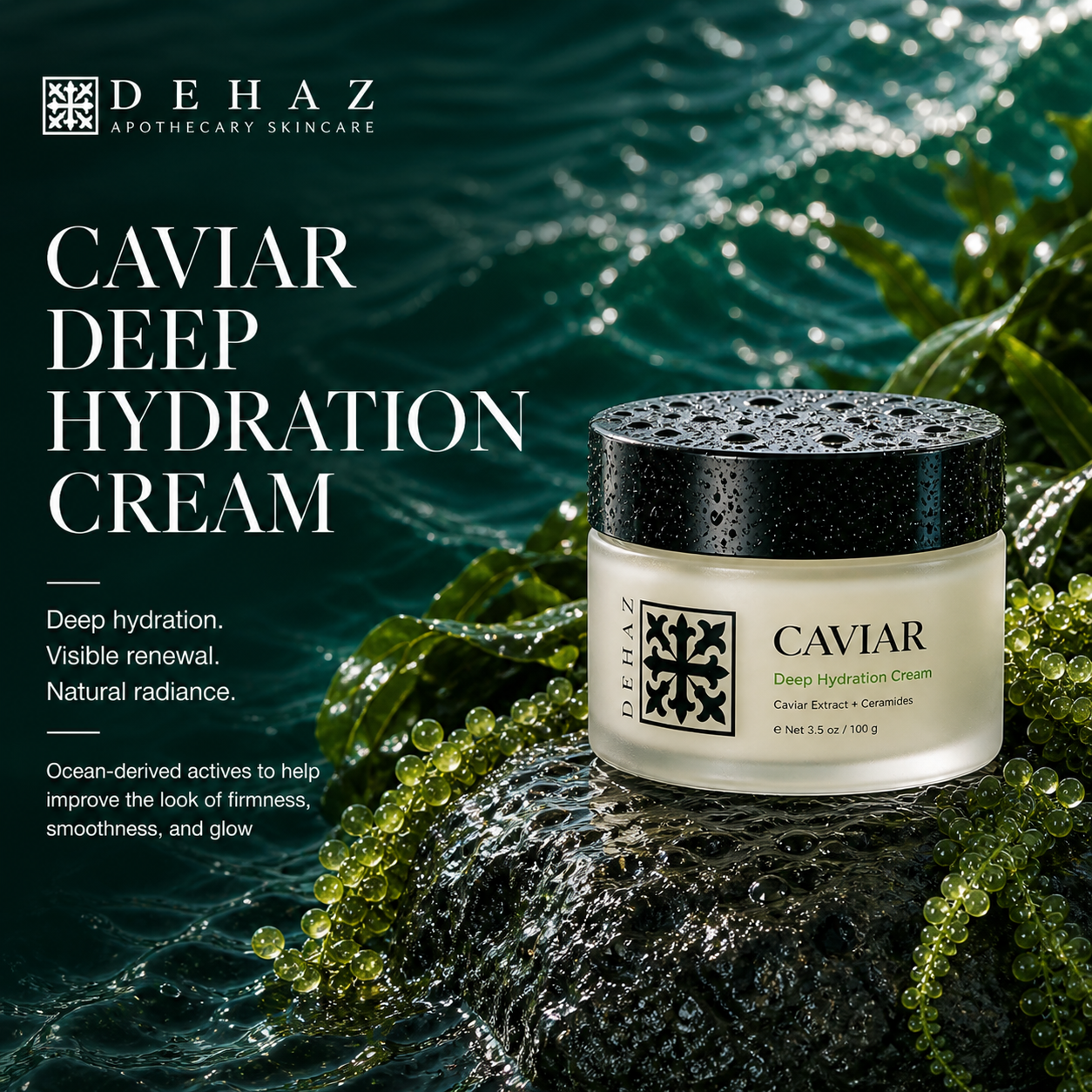
After the serum, a moisturizer closes the routine. The DEHAZ Triple Caviar Deep Hydration Cream is a hydration-focused cream that suits skin that looks oily but is actually short on water, and you can browse other textures in the DEHAZ moisturizer collection.
For more on combining products thoughtfully, see how to layer botanical skincare products, avoiding irritation with potent natural skincare, and balancing oily and dry skin naturally. If your skin leans oily and you are curious about a cream-based approach, our article on azelaic acid and niacinamide in a botanical cream covers that angle.
Frequently Asked Questions
What is black seed oil good for in skincare?
Black seed oil is used in skincare for its antioxidant-rich, aromatic profile and its traditional role in formulas for blemish-prone and oily-looking skin. Research on Nigella sativa is promising but mostly preliminary, and a cosmetic product supports how skin looks rather than treating a condition.
Can oily skin use a facial oil?
Many people with oily-looking skin do well with lightweight oils used in small amounts on cleansed skin. The key is choosing a fast-absorbing blend and using a few drops rather than a large amount. If your skin reacts, discontinue use.
Is black seed oil the same as black cumin oil?
Yes. Nigella sativa seeds are called black seed or black cumin, and the oil is sometimes labeled with either name. It is not the same plant as cumin used in cooking.
How many drops of the Nigella serum should I use?
The product directions call for 2 to 4 drops on the cleansed face, neck and décolleté, morning and evening, followed by moisturizer and daytime sunscreen.
References
- Eid AM, Elmarzugi NA, Abu Ayyash LM, Sawafta MN, Daana HI. A Review on the Cosmeceutical and External Applications of Nigella sativa. Journal of Tropical Medicine. 2017. doi:10.1155/2017/7092514. PMC5735686
- Downing DT, Stewart ME, Wertz PW, Strauss JS. Essential fatty acids and acne. Journal of the American Academy of Dermatology. 1986;14(2 Pt 1):221-225. PubMed 2936775
For wholesale, email a picture of your professional license to Info@dehazskincare.com.
Disclaimer: DEHAZ Apothecary Skincare® products are cosmetic products and are not intended to diagnose, treat, cure, or prevent any disease or medical condition. Product information is provided for cosmetic and educational purposes only and is not a substitute for medical advice. Always review the complete ingredient list before use, particularly if you have known allergies or sensitivities. Discontinue use if irritation occurs. If you have a medical condition, known allergy, or concerns regarding the suitability of a product for your skin, consult an appropriate healthcare professional before use.
