

Hydrating Peel for Dry Skin: What Mandelic Acid, Lactic Acid and Tsubaki Do Together
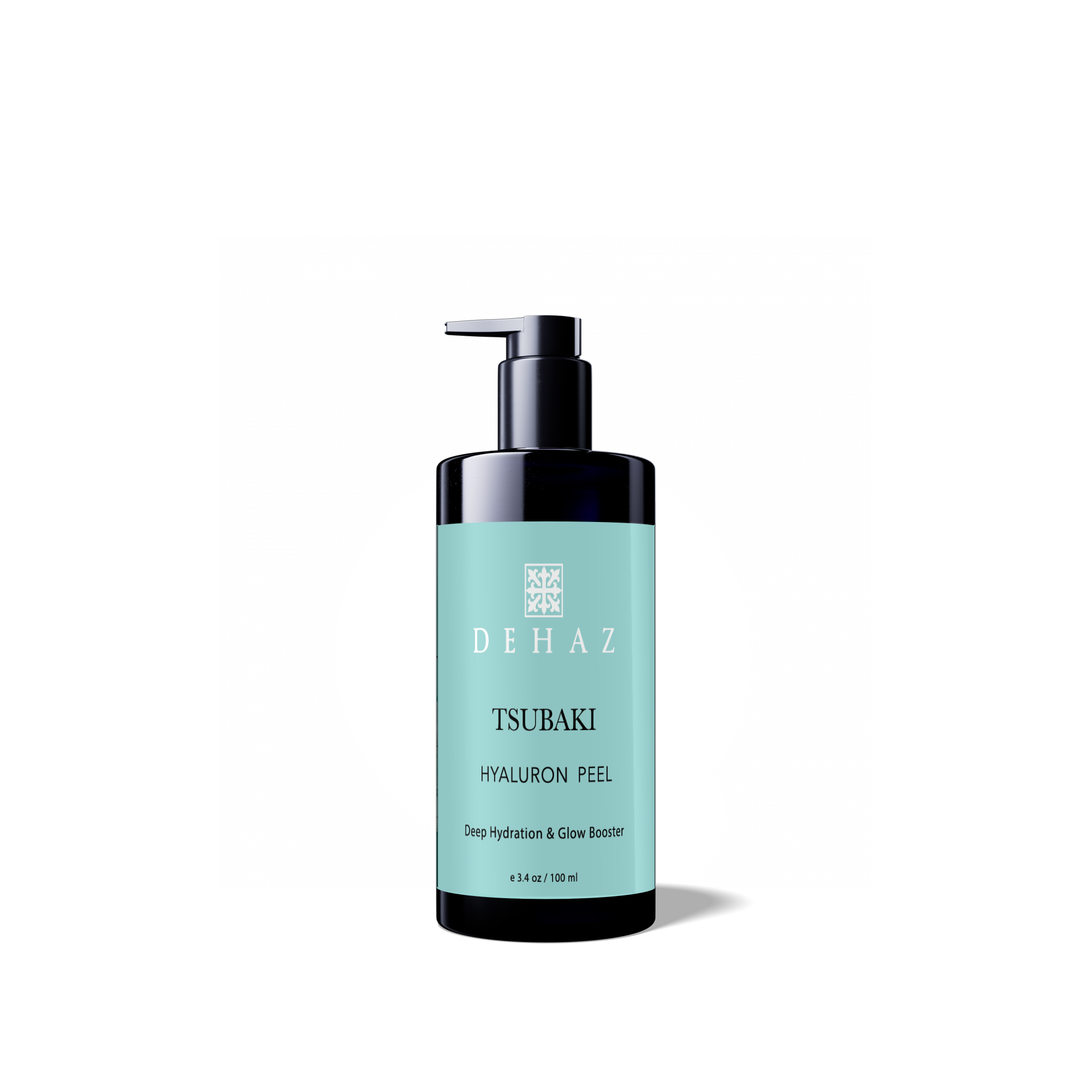
A hydrating peel is a leave-on-for-minutes treatment that combines gentle exfoliating acids with water-binding ingredients, so the skin is smoothed and cushioned in the same step. It suits dry, dull or weather-worn complexions that need a fresher surface but would not welcome a stripping, tingling peel. TSUBAKI Hyaluron Peel is DEHAZ's version: a clear, low-acid gel built around mandelic acid and lactic acid, with sodium hyaluronate and a quiet crowd of soothing botanicals alongside.
Late autumn is when this kind of product earns its place. Heating comes on, wind picks up, and skin that looked fine in September starts to feel rough at the edges. Exfoliation can help, but dry skin is exactly the type that punishes a heavy hand.
Why a peel for dry skin looks different from a classic peel
A conventional peel is built around speed: a strong acid, a short window, a visible result. A hydrating peel trades some of that urgency for comfort. The acids are chosen for gentleness, the base is loaded with humectants, and the treatment time is short and adjustable. The idea is that loosening the dull surface layer and replenishing water happen together, so the skin does not end up exfoliated but parched.
In the TSUBAKI Hyaluron Peel, the exfoliating team is mandelic acid, lactic acid and gluconolactone, with kojic acid added for the look of an even, luminous tone. The supporting cast is where the hydration comes from: glycerin, sodium hyaluronate, hydroxyethyl urea, sodium PCA and panthenol.
Mandelic acid: the larger, slower alpha hydroxy acid
Mandelic acid is an alpha hydroxy acid first associated with bitter almonds. Its molecule is larger than glycolic acid's, which is the usual reason formulators reach for it when they want smoothing without a lot of drama. The DEHAZ product page describes it as giving gentle, visibly uniform exfoliation that refines the look of texture and fine lines.
The published research is mostly on acne-prone skin. One small Polish study followed 60 people who used cosmetic creams with 5 percent or 10 percent mandelic acid once daily for two months and reported fewer pustules and less shine. About nine people in each group also had mild, temporary redness or flaking, which is a fair reminder that even a gentle acid is still an acid. The study had no control group and was funded by the cosmetics company that made the creams, so it is best read as context rather than proof, and it says nothing about this peel specifically.
Lactic acid and kojic acid: softness and tone
Lactic acid is the milk-derived member of the family, valued in cosmetics for helping skin look hydrated, supple and brighter. It pairs naturally with humectants, which is part of why it appears so often in formulas aimed at dry skin. Kojic acid, a fermentation-derived ingredient, is included to help the look of uneven pigmentation and a more balanced tone. Gluconolactone, also in the ingredient list, rounds out the acid blend with a softer touch.
Tsubaki: the camellia oil Japan has long prized
Tsubaki is the Japanese name for Camellia japonica, the camellia whose seeds are pressed into a pale, lightweight oil traditionally associated with Japanese hair and skin care. In this peel, camellia japonica seed oil and extract bring fatty acids and plant polyphenols to a formula that is otherwise water-based, which gives the finish a little more cushion than a plain acid gel.
It helps to keep the evidence in proportion. A dermatology review of Camellia japonica by Dr. Leslie Baumann notes that the plant is rich in phenolic compounds and fatty acids, and cites a small study in which the oil reduced transepidermal water loss without adverse reactions in 30 volunteers. She also points out that most of the supporting data comes from laboratory work or small studies. In the TSUBAKI Hyaluron Peel, camellia seed oil appears late in the ingredient list, so think of it as a conditioning touch rather than the main event.
The comfort side of the formula
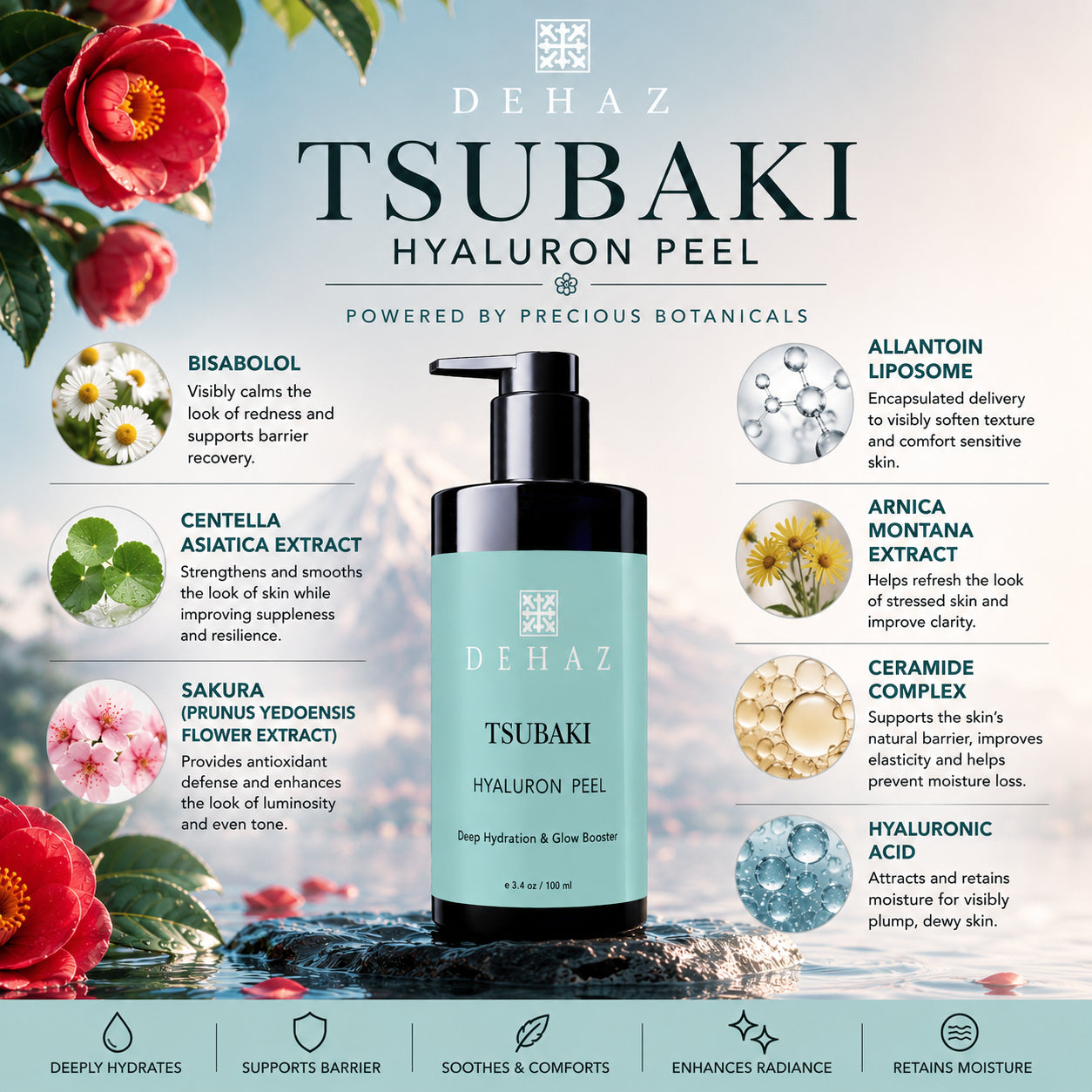
What separates a hydrating peel from a simple acid gel is the company the acids keep. According to the product page, the formula includes ectoin, a stress-protective molecule first found in microbes that survive in harsh environments, along with bisabolol from chamomile, allantoin, arnica flower extract and beta-glucan from oats. These are the ingredients associated with a calm, comfortable feel during and after exfoliation. Aloe leaf juice and hibiscus flower extract join them in the base. There is no independent trial of this particular combination, so the description here reflects what each ingredient is generally used for in cosmetics and how the formula is designed to feel.
How to use a hydrating peel
The directions for TSUBAKI Hyaluron Peel are simple. Apply a thin, even layer to clean, dry skin and leave it on for 5 to 10 minutes, depending on how your skin responds. First-time users are advised to begin with 5 minutes. Rinse with cool or tepid water and a soft sponge, then follow with a hydrating serum or a comfortable moisturizer. The product page suggests once or twice a week, or as directed by a licensed esthetician in professional facials.
Two practical notes. Exfoliating acids make a daily broad-spectrum sunscreen non-negotiable. And because the formula contains acids and a fragrance made from natural essential oils, patch test first and stop using it if irritation occurs. If you want more on easing new actives into a routine, see Avoiding Irritation With Potent Natural Skincare.
What to put on after the peel
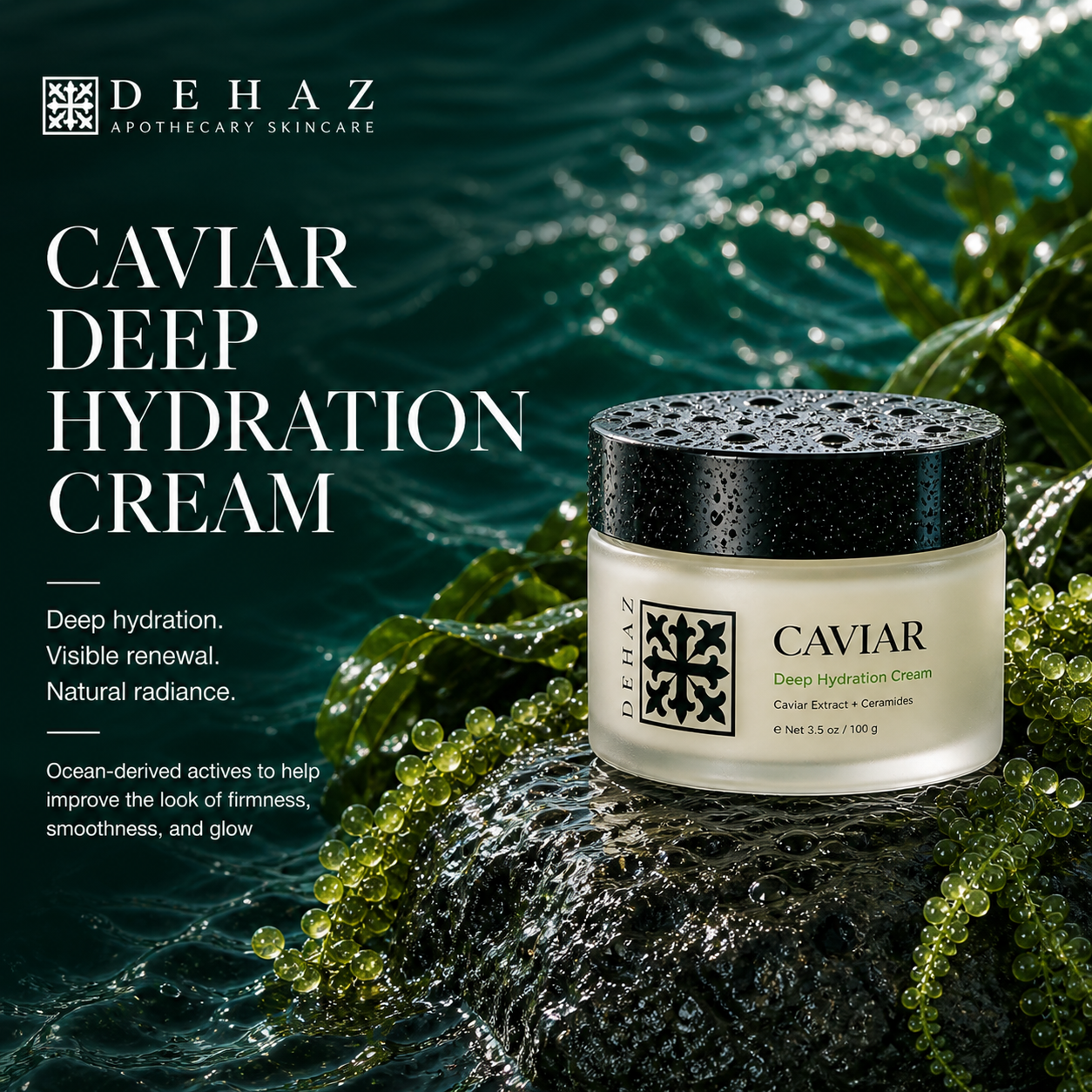
The step after rinsing matters as much as the peel. A lightweight hydrating layer is a natural fit, and DEHAZ Moroccan Rose Essence Serum is built on rose water and designed as a luminous, fast-absorbing hydration step. For dry or mature-looking skin that wants a fuller seal, DEHAZ Triple Caviar Deep Hydration Cream is formulated for deep hydration and visible plumping with caviar extract, marine peptides and multi-molecular hyaluronic acid. Both slot into the order described in How to Layer Botanical Skincare Products, and more rich-cream ideas for the cold months are in the Winter Skincare Routine for Dry Skin. You can browse the full range in the moisturizer collection.
For estheticians
In the treatment room, a hydrating peel is a useful option for clients whose skin is dry, dehydrated or seasonally dull and who are not candidates for a stronger acid that day. Because treatment time is adjustable, it can be tailored per client. It also sits comfortably in the same low-intensity family as the enzyme approach described in Enzyme Masks Explained, and as the gentle hydration focus of the Sakura hydration mask article. Review the ingredient list with each client, patch test, and keep the first session short.
Frequently asked questions
What is a hydrating peel?
A hydrating peel is a short-contact treatment that combines mild exfoliating acids, such as mandelic and lactic acid, with humectants like sodium hyaluronate, so the skin looks smoother and more hydrated in a single step.
How long should I leave TSUBAKI Hyaluron Peel on?
The directions call for 5 to 10 minutes on clean, dry skin, starting with 5 minutes for first-time use, then rinsing with cool or tepid water.
How often can I use it?
The product page suggests once or twice a week as a home ritual, or as directed by a licensed esthetician. Wear broad-spectrum sunscreen during the day.
Is mandelic acid gentler than other alpha hydroxy acids?
Mandelic acid has a larger molecule than glycolic acid and is commonly chosen for gentler exfoliation, though any acid can cause temporary redness or flaking, so introduce it gradually.
What does tsubaki mean in skincare?
Tsubaki is the Japanese name for Camellia japonica. Its seed oil is a light oil rich in fatty acids that is used in cosmetics for conditioning and softness.
Ready to try it? Explore DEHAZ products. For wholesale, email a picture of your professional license to Info@dehazskincare.com.
References
- Dębowska RM, Kaszuba A, Michalak I, et al. Evaluation of the efficacy and tolerability of mandelic acid-containing cosmetic formulations for acne skin care. Dermatology Review / Przegląd Dermatologiczny. 2015;102(4):316-321. termedia.pl
- Baumann L. Camellia japonica. MDedge Dermatology. February 3, 2023. mdedge.com
- DEHAZ product page and ingredient list, TSUBAKI Hyaluron Peel, DEHAZSkincare.com.
Disclaimer: DEHAZ Apothecary Skincare® products are cosmetic products and are not intended to diagnose, treat, cure, or prevent any disease or medical condition. Product information is provided for cosmetic and educational purposes only and is not a substitute for medical advice. Always review the complete ingredient list before use, particularly if you have known allergies or sensitivities. Discontinue use if irritation occurs. If you have a medical condition, known allergy, or concerns regarding the suitability of a product for your skin, consult an appropriate healthcare professional before use.
